


How the Nexperia dispute escalated from governance concerns into a geopolitical semiconductor supply chain crisis, and what it means for component availability and risk in 2026.
By the end of 2025, the semiconductor industry found itself confronting a disruption that did not fit the usual playbook. This was not a yield excursion, a fab fire or an AI-driven demand surge. Instead, a governance dispute escalated into a full-scale geopolitical intervention, exposing just how politically sensitive even “commodity” semiconductors have become. At the centre of the issue sits Nexperia, a company whose diodes, transistors and logic devices quietly underpin global automotive, industrial and infrastructure electronics.
To understand why this matters, it is important to understand what Nexperia represents. Formed in 2017 from NXP’s standard products business, Nexperia inherited deep European manufacturing roots, including wafer fabs in the UK and Germany, combined with a highly efficient global back-end network for assembly, test and packaging. Over time, much of that back-end capacity was built out in China. This structure was commercially logical and largely uncontroversial until semiconductors moved firmly into the realm of national security.
The turning point came with the growing realisation among Western governments that supply chain resilience could no longer be separated from ownership and governance. Nexperia’s acquisition by China-based Wingtech Technology, completed several years earlier, took on new significance as the United States tightened export controls on advanced semiconductors and encouraged allies to align on technology security. While Nexperia does not produce cutting-edge logic, its components are foundational. Without them, cars do not ship, factories do not run and infrastructure projects stall. That reality brought the company squarely into the strategic spotlight.
In September 2025, the Dutch government made a decisive move by invoking the Goods Availability Act, a rarely used national security law designed to protect critical supplies in times of crisis. The rationale was not framed around immediate shortages but around future risk. Dutch authorities expressed concern that strategic decision-making at Nexperia could, under foreign ownership, ultimately weaken Europe’s access to essential semiconductor components. In practical terms, the government imposed controls over major corporate decisions, including changes to leadership and strategy, to prevent what it viewed as unacceptable exposure.
The situation escalated further when the Dutch authorities intervened in Nexperia’s leadership, blocking the removal of the company’s CEO and later forcing changes at board level. This was an extraordinary step in a sector accustomed to relative autonomy and it sent a clear signal that semiconductors had crossed from industrial policy into hard security territory. From The Hague’s perspective, this was about safeguarding continuity of supply and retaining influence over assets deemed critical to European industry. From Beijing’s perspective, it was a direct and public challenge to corporate sovereignty.
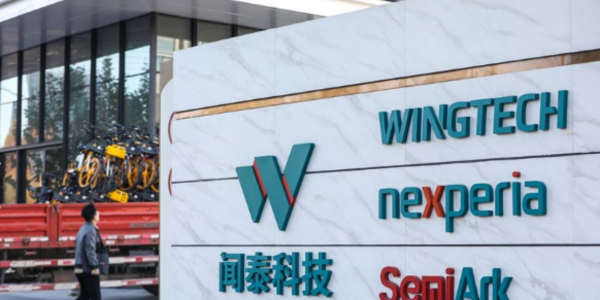
China’s response was swift and highly targeted. In early October 2025, export controls were imposed on specific Nexperia components and sub-assemblies manufactured or finished in China. Crucially, this was not a shutdown of factories. Production continued, wafers were processed and components were packaged. What changed was the legal ability to export certain finished goods. Nexperia declared force majeure for affected product lines and moved to controlled order entry and allocation, introducing a level of volatility that global customers had not experienced with the brand before.
This move was widely interpreted as retaliatory but it also reflected China’s broader position on semiconductor sovereignty. For Beijing, the intervention at Nexperia became a test case. It demonstrated that export control is not only a tool for advanced logic or memory, but also a powerful lever over foundational components that the global economy depends on. By late 2025, automotive OEMs and Tier 1 suppliers were already reporting production disruptions linked to missing discrete components, while industrial manufacturers faced allocation on parts that had historically been considered low risk.
The United States looms large in the background of this dispute, even if it is not directly involved in Nexperia’s governance. Washington’s long-standing pressure on allies to harden semiconductor supply chains and limit Chinese influence provided the broader geopolitical context. The Dutch intervention did not happen in isolation; it occurred in an environment where alignment with US technology policy is increasingly seen as a prerequisite for access to advanced manufacturing ecosystems. In that sense, Nexperia became collateral in a much wider strategic realignment.
As the industry looks ahead into 2026, the implications are profound. One immediate question is what happens to the inventory that has accumulated in China during the export restrictions. If and when controls are eased, there is a real possibility that stockpiled components will enter the market in volume. That could temporarily soften prices in certain categories, particularly commodity discretes. However, any such correction is unlikely to restore the previous status quo. Customers forced to diversify sourcing during the disruption will be reluctant to revert to single-source strategies, regardless of short-term price movements.
At the same time, attention has turned to Nexperia’s other manufacturing locations. Facilities in Malaysia and the Philippines are widely understood to be running harder, with incremental capacity increases underway. However, back-end semiconductor manufacturing, particularly for automotive-qualified parts, does not scale instantly. Qualification cycles, yield stability and customer approvals impose hard limits on how quickly output can be expanded without introducing new risks.
For governments, 2026 will be about recalibration. The Netherlands and the wider EU must reconcile the desire for strategic control with the reality that intervention can itself destabilise supply. China will have demonstrated the effectiveness of export controls as a bargaining tool, while the US will continue to push for tighter alignment among allies. The result is a semiconductor market where geopolitical exposure becomes as important as electrical performance or cost.
For manufacturers and OEMs, the lesson is unambiguous. Efficiency alone is no longer enough. Designs that rely on a single supplier or a single geography will be viewed as structurally fragile. Component selection will increasingly factor in ownership, manufacturing location and political risk alongside traditional engineering criteria.
This is where experienced manufacturing partners play a critical role. At Texcel, we are already operating in this new reality. We work with customers to proactively sourcing alternative components, not just for functional equivalence but for supply resilience and geopolitical exposure. We manage expectation setting early, well before allocation or force majeure becomes visible at line-build level. Most importantly, we embed this thinking inside programme design, rather than treating it as a reactive procurement exercise.
The Nexperia saga will not be an isolated incident. It is a signal of how semiconductor supply chains will operate going forward, shaped as much by governments and geopolitics as by fabs and factories. In 2026 and beyond, success will belong to those who recognise that reality early and design for it deliberately.
